
Introduction
Valeria Wasserman is best known in global public discourse as the wife of renowned linguist, philosopher, and political thinker Noam Chomsky. Despite this association, she has maintained a notably private life, choosing to stay away from media attention and public platforms. Her identity is often discussed in connection with Chomsky, but she has her own professional background and career as a translator, contributing to the world of language and communication in a quieter but meaningful way. This balance between public curiosity and personal privacy makes her an intriguing figure for those interested in the lives of intellectual families.
Much of the interest surrounding Valeria Wasserman stems from her connection to one of the most influential intellectuals of the modern era. However, reducing her identity solely to this association overlooks her independent professional path and personal choices. She has worked in translation, a field that plays a critical role in bridging languages and cultures, especially in academic and intellectual environments. This article explores her background, professional life, relationship with Noam Chomsky, and the broader public fascination with her identity.
2. Early Life and Background
Valeria Wasserman’s early life remains largely private, with limited publicly available verified information about her childhood, upbringing, or family background. This scarcity of details reflects her consistent preference for privacy rather than public exposure. What is generally understood is that she comes from Brazil and has built her career within multilingual and academic contexts, where language skills are highly valued.
Her educational background is believed to have prepared her for a professional life centered on languages and translation. Like many translators, her work likely required deep linguistic training and cultural understanding, enabling her to navigate complex academic and intellectual materials. While specific institutions or milestones are not widely documented, her later career suggests a strong foundation in language studies and communication.
3. Professional Career and Work as a Translator
Valeria Wasserman’s professional identity is primarily rooted in translation work. Translators play a crucial role in global communication, especially in academic and intellectual circles where ideas must cross linguistic boundaries. Her work has contributed to ensuring that complex texts and ideas can be understood by diverse audiences, a skill that requires precision, cultural awareness, and linguistic mastery.
Translation is not merely a mechanical process but an interpretative art. It demands the ability to preserve meaning, tone, and context while adapting content into another language. Wasserman’s involvement in this field highlights her intellectual engagement with language and communication. While she is not a public-facing academic or writer, her contributions support the dissemination of knowledge across languages, which is essential in global scholarship.
4. Relationship with Noam Chomsky
Valeria Wasserman is widely recognized as the spouse of Noam Chomsky, one of the most influential figures in linguistics and political thought. Their relationship has drawn public attention due to Chomsky’s global prominence. However, both individuals have maintained a relatively private personal life, avoiding excessive media exposure and focusing instead on intellectual and personal pursuits.
Their partnership is often described in terms of shared intellectual environments rather than public appearances. While Chomsky is frequently engaged in academic and political discussions, Wasserman has remained largely outside the spotlight. This balance reflects a mutual preference for privacy, despite the inevitable curiosity surrounding their relationship. Their marriage illustrates how individuals in high-profile intellectual circles can still maintain boundaries between public work and private life.
5. Life Away from the Public Eye
One of the most notable aspects of Valeria Wasserman’s life is her strong preference for privacy. Unlike many individuals connected to globally recognized figures, she does not actively engage in media interviews, public commentary, or social media presence. This intentional distance from public visibility has contributed to the limited availability of personal information about her.
Living away from the public eye allows Wasserman to maintain a sense of normalcy despite her association with a highly visible intellectual. Her lifestyle reflects a deliberate choice to separate personal identity from public recognition. This approach is increasingly rare in an age where digital presence often defines public perception, making her privacy even more distinctive.
6. Public Interest and Media Attention
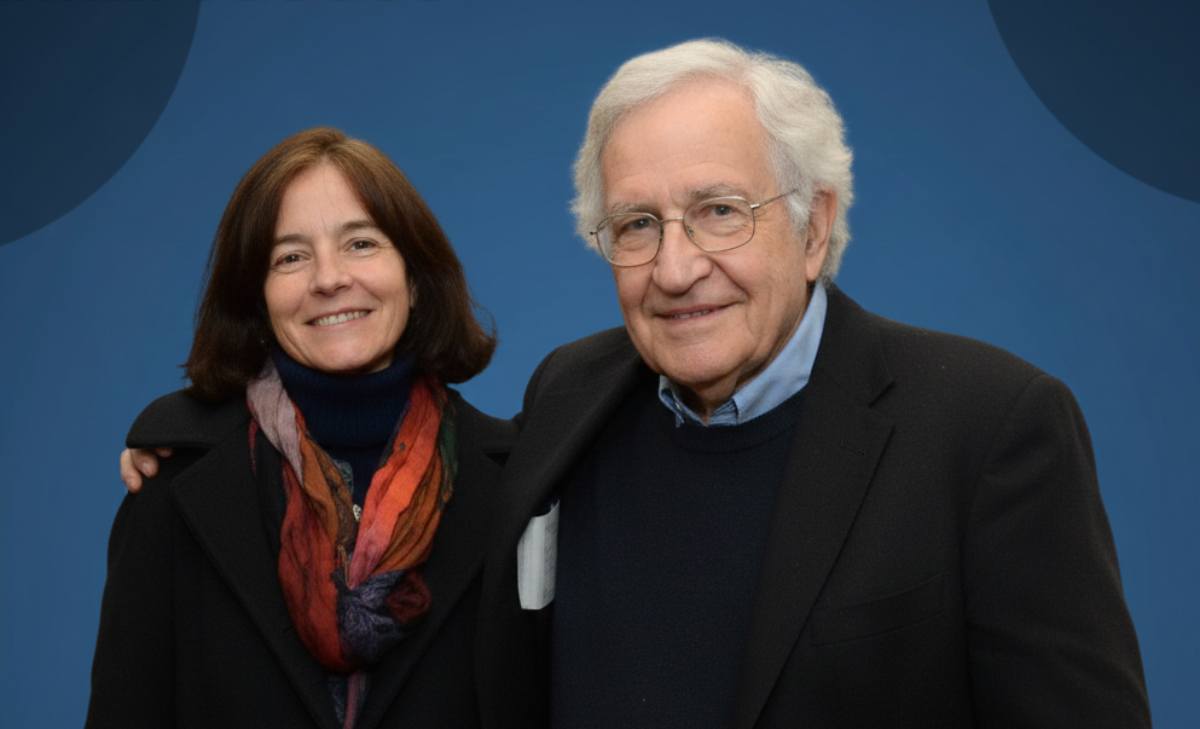
Public interest in Valeria Wasserman largely arises from her connection to Noam Chomsky. As one of the most cited intellectuals in modern history, Chomsky’s personal life naturally attracts curiosity. However, Wasserman herself has not sought attention, and much of what is speculated about her comes from limited or indirect sources.
Media portrayals of individuals like Wasserman often face the challenge of balancing curiosity with respect for privacy. Since she does not maintain a public persona, interpretations of her life can sometimes be incomplete or speculative. This raises broader ethical questions about how much attention should be directed toward individuals who have not chosen public visibility, even when they are connected to famous figures.
7. Cultural and Intellectual Context
Valeria Wasserman’s role as a translator places her within a broader cultural and intellectual ecosystem where language acts as a bridge between ideas and societies. Translation is essential in academic discourse, particularly in fields like linguistics, philosophy, and political theory—areas closely associated with Noam Chomsky’s work. In this sense, her professional contributions align indirectly with global intellectual exchange.
Translators often remain unseen despite their significant influence on how knowledge is shared across the world. Wasserman represents this category of professionals who facilitate understanding without necessarily receiving public recognition. Her work underscores the importance of linguistic professionals in shaping how ideas travel across cultures and languages, reinforcing the value of translation in global communication.
8. Conclusion
Valeria Wasserman is a figure defined as much by her privacy as by her professional and personal associations. While widely recognized as the wife of Noam Chomsky, she has maintained her own identity as a translator and intellectual contributor in a quieter capacity. Her life reflects a conscious choice to remain outside public scrutiny, focusing instead on meaningful but less visible work.
In a world increasingly driven by visibility and digital presence, Wasserman’s approach offers a contrasting example of privacy and discretion. Her story highlights how individuals connected to prominent figures can still maintain personal boundaries and independent identities. Ultimately, her life illustrates the balance between public curiosity and private existence, reminding us that not all influential roles are performed in the spotlight.
9. Frequently Asked Questions (FAQs)
1. Who is Valeria Wasserman?
She is a Brazilian translator best known for being the wife of Noam Chomsky.
2. What is Valeria Wasserman’s profession?
She works as a translator, specializing in linguistic and academic communication.
3. Is Valeria Wasserman a public figure?
No, she maintains a private lifestyle and avoids public attention.
4. How is she related to Noam Chomsky?
She is his spouse and shares a private life with him outside of public appearances.
5. Why is there limited information about her?
Because she deliberately chooses to keep her personal life out of media and public platforms.